 |
| Pentax K-7, SMC Pentax-DA 40mm f2.8 limited |

Dienstag, 7. August 2012

Donnerstag, 2. August 2012
Book review: Light - Science & Magic by Fil Hunter

Lighting is the language of
photography:… that's how the
authors explain the meaning of light to photos. But first of all they
just explain that every reader – not only the profis - could use
their hints. Nobody has to be afraid of a secret-science. Lighting is
just (understandable) physics. And one essential advice they give:
try every example they gave in this book, only that's the way to
learn a correct lighting. That's basically right, but I think not
many of the readers have a large light for a proper illumination at
home.
But first thinks
first: Every book about „doing things“ or procedures has to talk
about basics. And so did the authors: What is light, what is
contrast? What are colors? What about shadows? What is the
relationship between light, the subject of the photo and the viewers?
What is reflection and much more basics you have to know. But it's
only a short view of the basic physics. Quick they go into practical
photography and how to light several objects or situations. So it's
much more a practical than a theoretical book.
This book contains
not only hints for beginners, it although addresses the experienced
photographer and points out devices like a gobo (Do you know what a
gobo is and how to use it? No? Go and read the book?) or how to use
large lighs. All this they do by explaining concret situations: how
to light objects with uneven surfaces, how to reveal the shape of an
object, working with metal and much more. The authors use a lot of
common objects for their example pictures, like cigar boxes, glasses
or metal spatulas, so everybody should be able to repeat their
photographing at home. Even the correct lights in portraits is an
aspect in this book.
The writing is
very interesting and you will not be bored even when the authors
write a lot about technical stuff. But if you want to improve your
lighting abilities, you have to know basics things about the physics
and behaviour of light and you should know about practical examples.
A real helpful
book and I hope I could improve my photographic abilities.
Montag, 16. Juli 2012
Sonntag, 15. Juli 2012

Dienstag, 10. Juli 2012
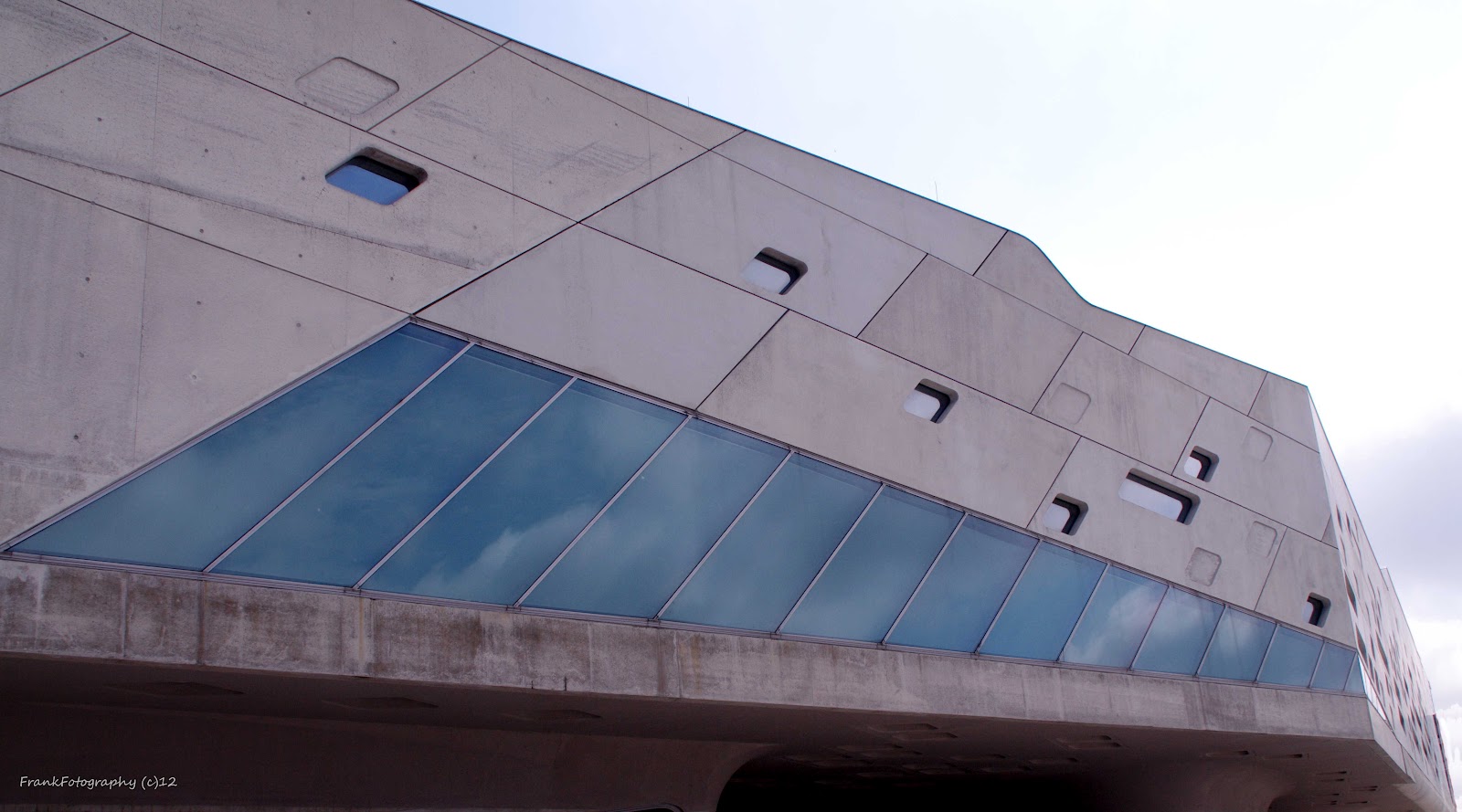
Bilder / Pictures: Phaeno
Phaeno - an experience museum in Wolfsburg (Germany).
Phaeno - discovered the world today already ?
----------
Phaeno - ein Experimentiermuseum in Wolfsburg.
Phaeno - Da staunst du.


Phaeno - discovered the world today already ?
----------
Phaeno - ein Experimentiermuseum in Wolfsburg.
Phaeno - Da staunst du.
 |
| HDR - Tone-mapping with Oloneo HDREngine |


 |
| All pictures: Pentax K-7 |
Samstag, 7. Juli 2012
Bilder / Pictures: Jüdisches Museum in Berlin
Last week I was in the Jewish Museum in Berlin. The architecture is from Daniel Libeskind, but I don't like the outside architecture very much. The house is very interesting, when you could see it from the sky:
Jewish Museum Berlin from sky
But inside it's real exciting.
----------
Letzte Woche war ich im Jüdischen Museum in berlin. Die Architektur ist von Daniel Libeskind, aber ich mag die Verkleidung des Gebäudes nicht besonders. Interessant ist es, wenn man es aus der Luft betrachten kann:
Jüdisches Museum Berlin aus der Luft
Und innen ist es sehr aufregend.


Dienstag, 3. Juli 2012
Book review: Practical HDR by David Nightingale
Today I want to recommend a book from
„focal press“; it's „Practical HDR“ from David Nightingale.

HDR-Photography – High Dynamic Range
– is a possibility to capture scenes with a high dynamic range,
that meens, with very bright and dark parts in one picture. The
classic example is a picture of a bright window in a dark wall. When
you take your camera you will got a right exposed wall and an
overexposend window or a right exposed window and an underexposed
wall. The best solution would be to take the right exposed parts of
every picture and stitch them together, so you will get a right
exposed picture overall. That's the goal of HDR-Photography.
First of all Nightingale explains the
basics, in example why your camera captures such difficult scenes in
another way than your eyes and tell you how to read a histogram. Very
interesting are their effects on photography.
The second part will guide you through
cameras, with which it is possible to create HDR-Images and the gear
you would need. You will be amazed, that the most cameras are
adequate for HDR-Photography. If you want to create a serious
HDR-Image mostly only a tripod is inevitable.
Then it's time to get practical. Sure,
you could use the HDR-Mode of your camera, if you want it easy and
your camera have one, but will you be satisfied with the result? It's
better to shoot a bracketed exposure sequence and then merging the
pictures together. To create the typical HDR-style you need to edit
the picture – this design-step calls tone-mapping.
But if you are going to merge the
pictures and want to edit them afterwards, you need a software.
Nightingale introduce the reader to some programs, like Photoshop
CS5, Oloneo PhotoEngine or HDR Efex Pro. All these programs you have
to buy and they will cost you 100 Euro and up (a tip from me: try
Oloneo HDREngine, it costs about the half of the other programs and
do its job although pretty well). He explains only those steps you
really need to create a HDR-Image and not the whole bunch of
possibilities those programs give you into your hands..
If you are in using only opensource
software – and there are possibilities on the market for
HDR-Photography – this book don't have to much information for you.
Nightingale explains explicit with the mentioned programs how to
merge and edit the pictures. It's difficult to transfer the hints
from Photoshop CS 5 to Gimp because of the different levers you have
to use. I wouldn't recommend this book to Gimp or Luminance users (an
opensource program to create HDR-Images).
The last part tells you something about
creating a pseudo-HDR-image from one raw-file and its problems,
especially the noise in those pictures.
That's it... now you have to be able to
create your own HDR-Images.
What else should I have to tell you?
Right: the book is peppered with HDR-Images. And a very good part of
this book is, that Nightingale explains, how he reached the results
or you could read in a small table at the side of the most pictures,
which calibration the photographer used. So you have a whole bunch of
tips for your first steps in HDR-Photography.
If I could give this book five stars, I
would give it only 4 because Nightingale ignored opensource programs
for HDR-Photography. This would be an enrichment in the hopefully
coming next edition.
Abonnieren
Posts (Atom)